


Lindsey Graham’s death revives a rare and controversial custom: Keeping a Senate seat in the family
Lindsey Graham’s death revives a rare and controversial custom: Keeping a Senate seat in the family

Brendan RasciusSun, July 26, 2026 at 11:37 AM UTC
11
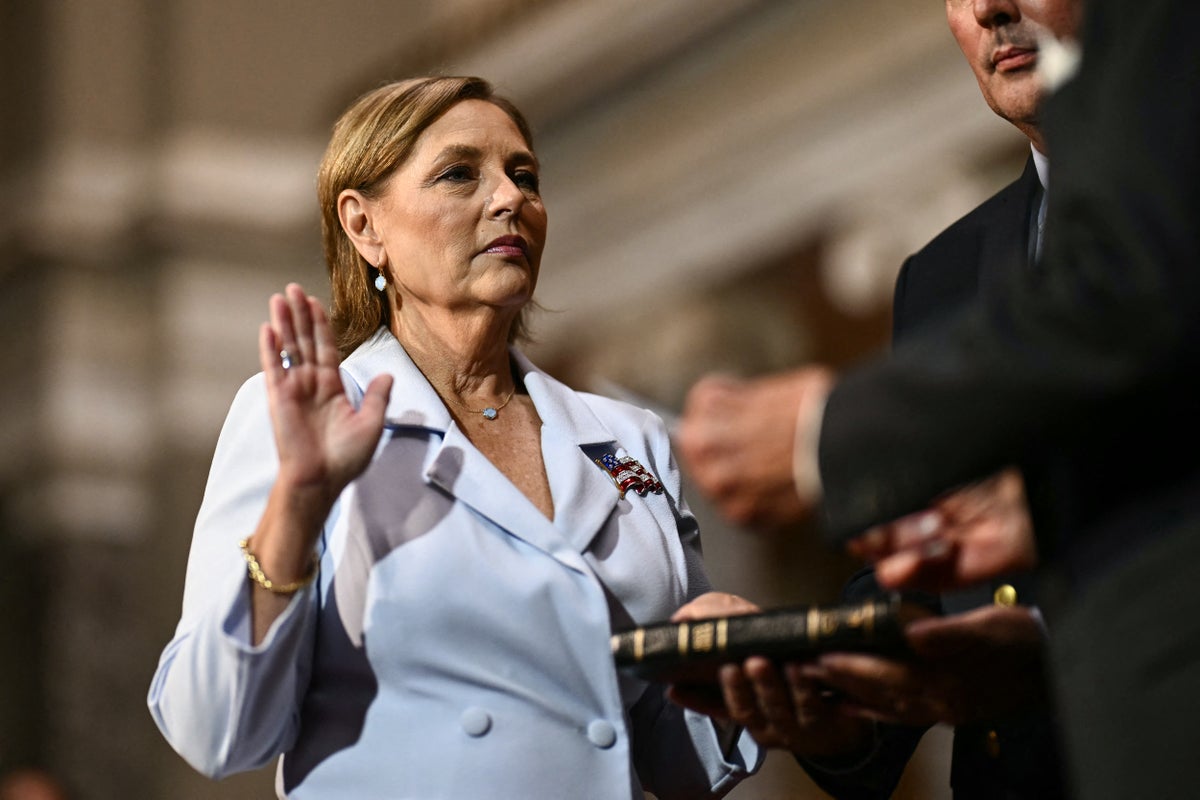
Darline Graham, sister of Lindsey Graham, is ceremonially sworn in as a U.S. Senator on July 14 to fill his seat, following his sudden death (AFP via Getty Images)
Lindsey Graham’s sudden death earlier this month revived an unusual American tradition: filling Senate vacancies with family members.
After the 71-year-old senator passed from an aortic rupture, South Carolina’s governor appointed his sister, Darline Graham, to serve out the remainder of his term. Graham, who previously led the state’s Commission for the Blind, announced this week that she will seek a full six-year term in November with the backing of President Donald Trump.
This type of ascension, while steeped in history, is extremely rare. Over the last century, only a handful of deceased or departing members have been replaced by kin, with most of the appointees being widows.
The advantages are straightforward. Relatives often arrive with built-in name recognition, familiarity with staffers and access to the same donor networks. They can offer continuity in a moment of disruption, and can serve as consensus candidates in a fractured field.
But the practice also carries a whiff of the Old World. The structure of the Senate is already fairly undemocratic, and family succession can reinforce that perception. Even if a replacement is qualified, their appointment inevitably invites questions about nepotism and fairness.
“It is, frankly, a throwback to — not necessarily feudalism — but power by hereditary rule and the British crown,” Rob Richie, founder of the non-profit Expand Democracy, told The Independent. “Here we are in America 250. That is something that we were rejecting, but obviously not completely escaping from.”
An extremely rare practice
While House vacancies must be filled by election, the Senate process is different. The 17th Amendment, ratified in 1913, gives states the option to allow governors to make temporary appointments until a successor is elected. State law determines whether and when a special election is held.
Since 1913, only 12 Senate vacancies have gone to family members, making it an extremely rare practice, according to an analysis of Senate archives.
The first was a trailblazer twice over. In 1931, Hattie Caraway was appointed after her husband, Democratic Arkansas Senator Thaddeus Caraway, died of a blood clot. She went on to win election in 1932 and 1938, becoming the first-ever woman elected to the Senate.
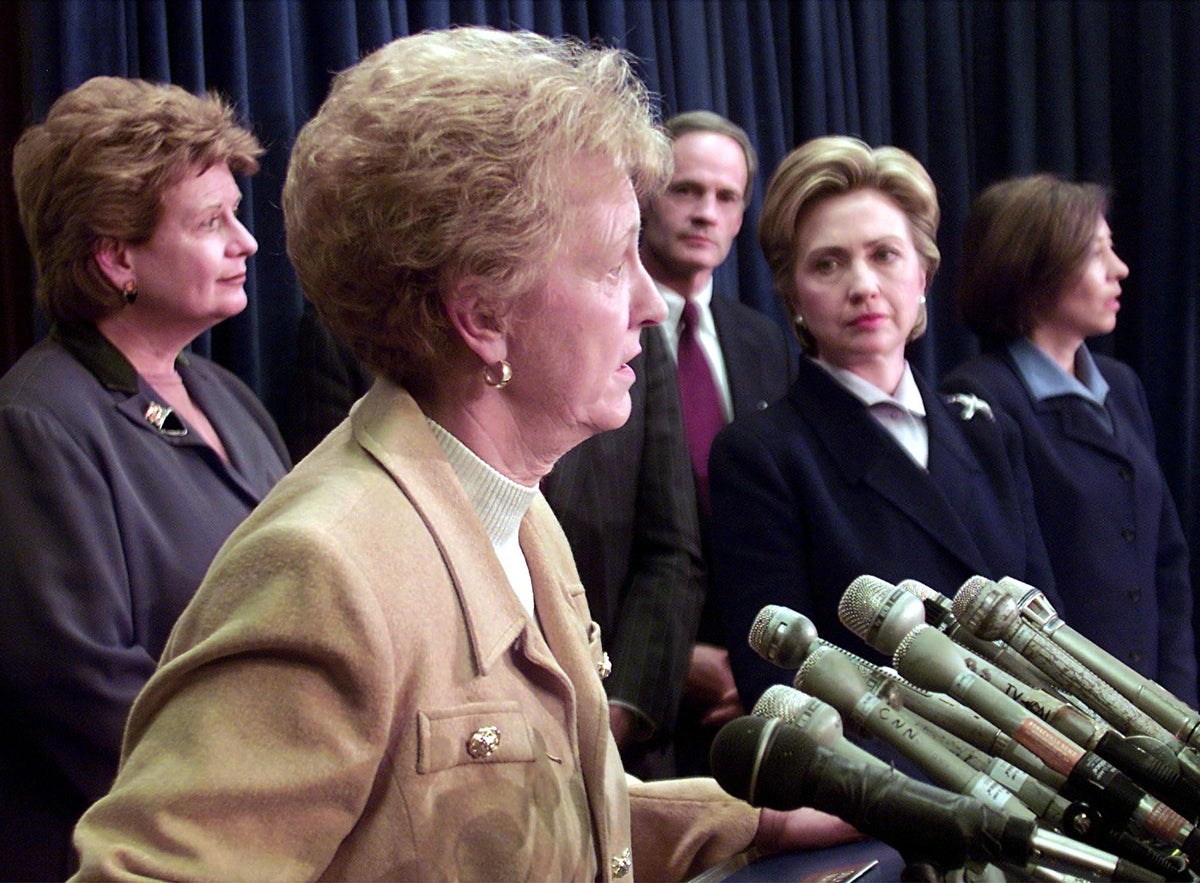
In 2000, Jean Carnahan was appointed to replace her husband, Mel Carnahan, who died in a plane crash shortly before the election in which he was posthumously elected. Pictured: US Senator-elect Jean Carnahan, Democrat of Missouri, speaks to the press in December 2000 (AFP via Getty Images)
Another instance of so-called widow’s succession came in 2000 when Jean Carnahan was chosen to replace her husband, Mel Carnahan, who died in a plane crash shortly before he was elected to represent Missouri in the Senate. Upon arriving to Capitol Hill, her tone was understandably more solemn than celebratory.
“I know I did not come to the U.S. Senate in the same way you did,” Carnahan, a Democrat, told her new Senate colleagues. “My name has never been on a ballot. On election night there was no victory celebration. You are here because of your win; I am here because of my loss. But we are all here to do the work of this great nation.”
Until now, the most recent senator to have filled in for a relative was Senator Lisa Murkowski, an Alaska Republican. In 2002, then-Governor Frank Murkowski, who had just resigned from the Senate, tapped his daughter to succeed him — and she has since won election four times.
Upsides: continuity, name recognition and the sympathy factor
Political experts say there are multiple practical reasons governors might look to a senator’s widow, child or sibling when filling a vacant seat.
Chief among them is name recognition — something Darline Graham, who has never before held elected office, has in spades.
Her late brother had occupied his Senate seat for more than two decades. During that time, he mounted a presidential bid and positioned himself as a powerful interlocutor between lawmakers, foreign leaders and Trump. The scope of Lindsey Graham’s influence is perhaps most visible in death. His funeral, set for Tuesday at the National Cathedral, is expected to draw multiple world leaders, with Trump slated to deliver a tribute.
“I mean, he's been in public life for over 30 years in South Carolina,” Gibbs Knotts, a political scientist and provost at Coastal Carolina University, told The Independent. “Obviously she's got really, really strong name recognition.”
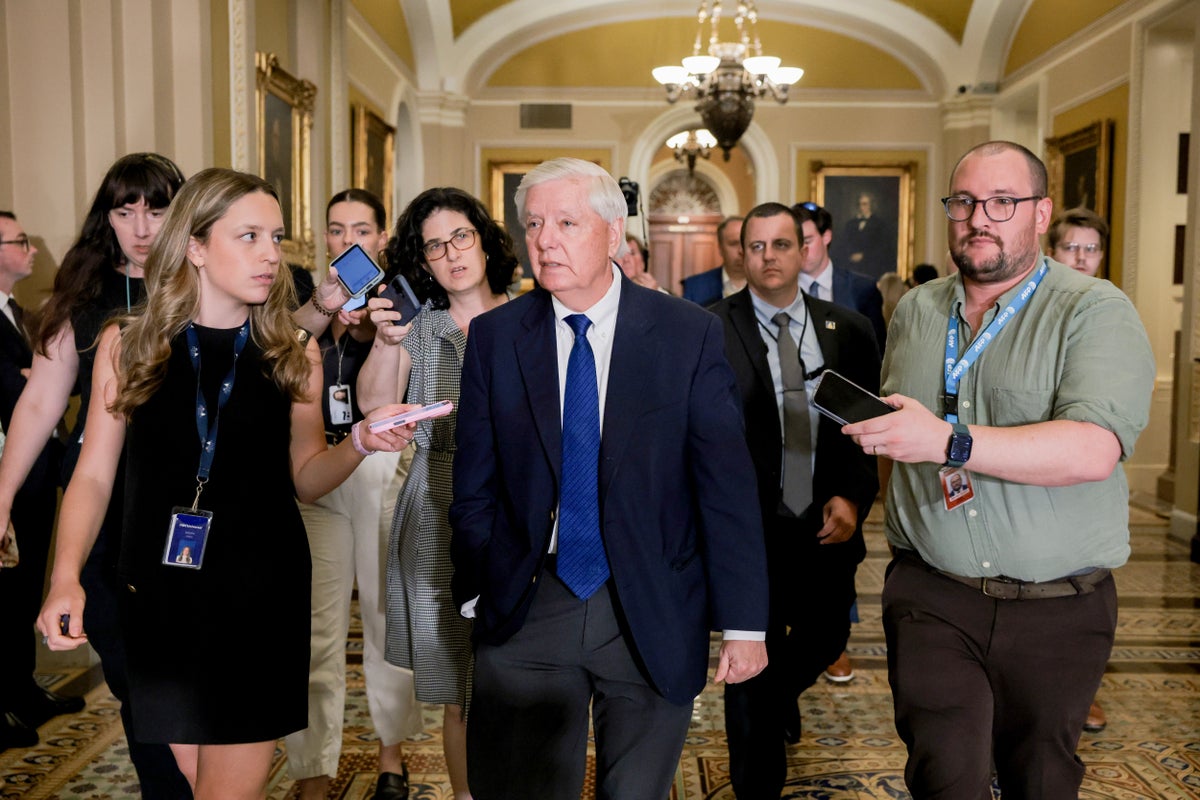
Lindsey Graham, one of the most influential GOP senators, died suddenly on July 14. A medical examiner said the cause of death was an aortic rupture caused by hardened arteries (Getty Images)
Serving in Congress also inevitably means family involvement. Relatives of lawmakers may already be familiar with staff and donors, and accustomed to the grind of speeches, fundraisers and campaign travel.
“If you're, if you're the spouse of a politician, you are going to all the same political events, you're meeting all the same people, you're making the same contacts, you get known,” Gregory Koger, a political science professor at the University of Miami, told The Independent. “And so, it is itself its own training.”
He said the sympathy factor cannot be overlooked.
“Widows, or a sister in this case, often make pretty handy substitutes because they are objects of sympathy,” Koger said. They can also serve as a “consensus figure” that people rally around, helping a governor sidestep “the costs and controversy of a contested primary.”
In the case of Darline Graham, though, these advantages may be less relevant than the endorsement of President Trump, who has established himself as the kingmaker of GOP politics.
Advertisement
Trump urged South Carolina Governor Henry McMaster to tap Graham, and pressed her to run for a full term, stating that “there would be nobody better to honor the legacy of her beloved brother, Lindsey.”
‘I'm a skeptic of this policy’
At the same time, elevating someone to one of the most powerful positions in government based on their bloodline carries practical and political downsides, experts said.
For one, a successor may not prove nearly as effective as the person they replace. “Appointees have varied in quality. Muriel Humphrey was a short-term placeholder: a nice person, but she did not have the same impact as Hubert Humphrey,” John Pitney, a politics professor at Claremont McKenna College, told The Independent.
They may also diverge ideologically from their relative. Darline Graham, for instance, distanced herself from her brother’s fixation on foreign policy within days of her appointment.
Additionally, the practice itself is controversial and undemocratic.
Koger pointed to Lisa Murkowski’s 2002 appointment as a flashpoint. “That was especially controversial,” he said. “You know, a father appointing his own kid. Other Republicans in Alaska did not take kindly to it.”
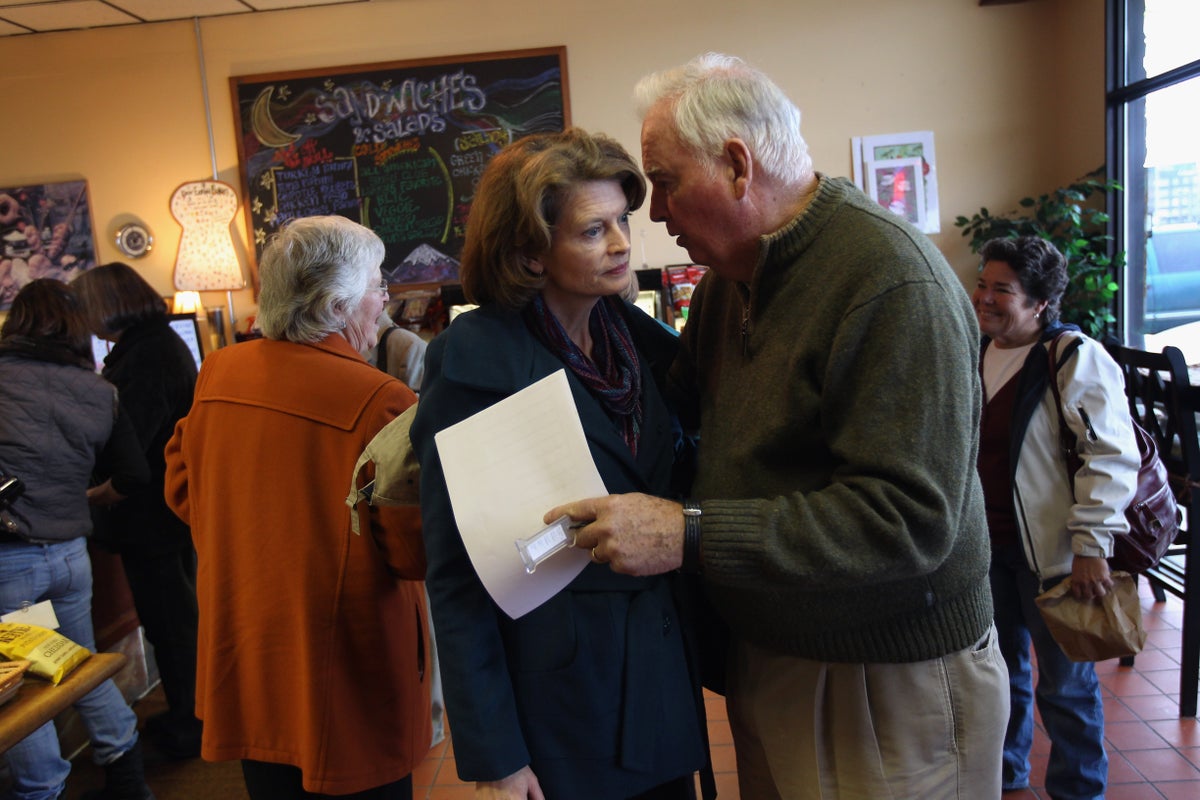
Until now, the most recent example of a Senate vacancy filled by a relative was Senator Lisa Murkowski, an Alaska Republican. Pictured: Lisa Murkowski speaks with her father Former Alaska Senator and Governor Frank Murkowski in 2010 (Getty Images)
While on the campaign trail two years later, Murkowski faced direct accusations of nepotism from Democratic challenger Tony Knowles. “I did not make nepotism an issue...Frank Murkowski did when he appointed his daughter,” Knowles said during a televised debate.
Sarah Palin, who defeated Frank Murkowski to become governor in 2006, wrote years later: “Public service should be an honor not a family dynasty.”
Lisa Murkowski herself has called the nepotism charge “accurate,” according to CBS News.
Richie argued the broader system of Senate appointments is susceptible to abuse and overdue for overhaul. He cited the case of former Illinois Governor Rod Blagojevich, who served eight years in prison after attempting to sell Barack Obama’s vacant Senate seat (Trump pardoned him last year).
“We think the government should flow from the people,” he said. “For that reason, I'm a skeptic of this policy.”
He’s not alone in his skepticism. Lawmakers in five states have enacted legislation requiring that Senate vacancies be filled only by election. Kentucky was the most recent state to go this route, with the Republican legislature taking power away from Governor Andy Beshear, a Democrat, in 2024.
Politics as a family business
From the earliest days of the republic, America has embraced the concept of politics as a family business, celebrating the virtues of meritocracy while making room for the occasional dynasty.
John Adams, the nation’s second president, was followed to the White House by his son, John Quincy Adams, the sixth president. More than a century later, George H.W. Bush watched his own son win election. And Franklin Roosevelt, the longest-serving president in U.S. history, followed in the footsteps of his cousin, Theodore Roosevelt.
Congress, too, has proved fertile ground for legacy-building. In 2015, 20 sitting lawmakers were the children of former lawmakers, according to Bloomberg reporter Greg Giroux.

From the earliest days of the republic, America has embraced the concept of politics as a family business. Pictured: Former president George W. Bush, left, wheels his father, former president George H.W. Bush into the church for the funeral for former first lady Barbara Bush in 2018 (Getty Images)
Americans had mixed views on political dynasties in a 2014 YouGov poll. Forty-three percent said candidates from such families are more experienced than other candidates, while 48 percent said they represent an “unfair concentration of power.”
Whether this tradition will endure is an open question — though there are signs its appeal may be waning.
Donald Trump Jr., the president’s eldest son, consistently polls in the single digits among Republican voters when floated as a potential 2028 contender, trailing figures like Vice President JD Vance and Secretary of State Marco Rubio.
Even the most storied political families have shown diminished electoral strength.

Last month, Jack Schlossberg — the grandson of John F. Kennedy — captured just 10 percent of the vote in a Democratic primary for a House seat in New York City (AFP via Getty Images)
In 2020, Representative Joe Kennedy III — a grandson of Robert F. Kennedy — failed in his bid to unseat Senator Ed Markey of Massachusetts. And last month, Jack Schlossberg — John F. Kennedy’s sole grandson — captured just 10 percent of the vote in a Democratic primary for a House seat in New York City.
The success or failure of Darline Graham’s bid for a full six-year term will serve as another test of the potency of political lineage. The special primary will be held on August 11.
“It is a sort of throwback thing,” Richie said, reflecting on American dynasties. But, “it's attractive to people. They still have kings and queens in many places.”
Source: “AOL Breaking”
